China and Brazil: The Other Two Big Semaglutide Markets Going Generic
China's semaglutide patent died on schedule, but the clinical data stays protected until about April 2027, and the generics wait in line.
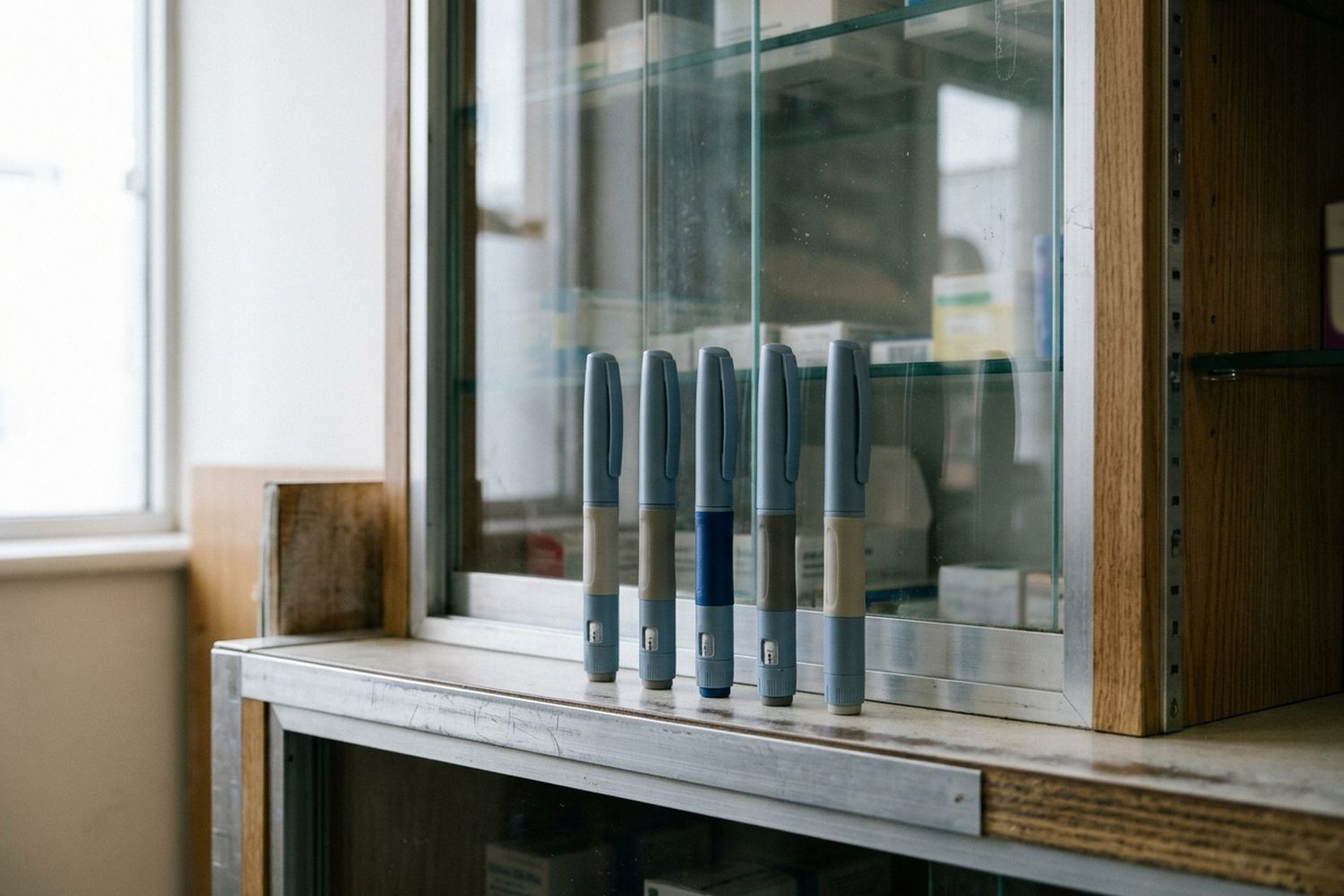
On March 20, 2026, the core patent on semaglutide, the molecule inside Ozempic and Wegovy, expired in China and in Brazil on the same day. Brazil approved its first generic version in May. China, as of October 2026, had approved zero.
So the short answer for anyone searching semaglutide china is this: the compound patent is gone, but a separate layer of protection for Novo Nordisk’s clinical trial data runs to approximately April 2027, and it blocks generic approval until then. The line behind that barrier is long. By the day the patent expired, 12 domestically made semaglutide generics from 10 Chinese companies had filed for registration with the NMPA, China’s drug regulator. Brazil, meanwhile, refused Novo Nordisk’s request to extend its patent term, and as of September 2026 its approved generics were diabetes pens only.
The dumb version: the patent ends and the pens show up
Here is the dumb version of how a drug goes generic, and I mean “dumb” as a compliment. A company invents a molecule and gets a patent. The patent lasts a fixed time. When it ends, other companies make the same molecule and sell it for less. That is the whole system, and it fits on an index card.
The question presented is whether a generic manufacturer may sell semaglutide on the date the patent expires. The record shows that in India the answer was, in practice, no: over 40 generic brands launched on March 21, 2026, which is the day after. (The patent is entitled to its final day, the same way a hotel guest is entitled to the room until checkout.) Prices went from roughly $100 to $125 a month for Ozempic to roughly $20 to $50 for generics, and Novo Nordisk cut Ozempic by 36% and Wegovy by 48% within 10 days.
That is the dumb version. It works.
The sophisticated version: semaglutide in China waits for its data
China runs the same race with an extra hurdle. When an originator runs years of clinical trials, regulators in many countries protect that data for a period, meaning a generic company cannot simply point at Novo Nordisk’s trials and say “what they said.” In China that period for semaglutide runs to approximately April 2027. The industry calls this “data exclusivity,” which sounds like a relationship status, and for roughly five more months it is one.
I assume the conversations inside Chinese drug companies on March 20 went something like this (invented, but I feel like it is close):
“The patent expired.”
“Great, so we launch tomorrow?”
“No. Now we wait for the data to expire.”
“Data expires?”
“In April. Approximately.”
Meanwhile everyone files paperwork, because being early matters. On February 25, 2026, Jiuyuan Genetic Biopharmaceutical said in a Hong Kong Stock Exchange filing that the NMPA had accepted for review its application for Jikeqin, a generic Wegovy. Hybio Pharmaceutical and Jiangsu Sinopep-Allsino Biopharmaceutical are also working on their own launches. Back in June 2024 there were at least 15 Chinese versions in development; IQVIA now counts 17 that have reached Phase III trials or the pre-market application stage, with 9 of them running trials specifically in obesity.
Then there is the classification question, which is where the sophisticated version earns the name. Qilu Pharmaceutical and Changchun Bcht Biotechnology registered their semaglutide as Class 2.2 drugs, “modified new chemical drugs.” Jiuyuan Gene and Xibeijiang Pharmaceutical (part of Livzon Group) registered theirs as Class 3.3, generic versions of therapeutic biological products. Same molecule. Two filing cabinets. To be fair, a peptide does sit between chemistry and biology, so this is less a contradiction than a molecule refusing to fill out a form.
Let me dwell for a second on 12 drugs from 10 companies. Twelve is more than ten. That means at least one company looked at a market with no approved generics yet and decided the right number of applications to have pending was more than one. Hedging against your own regulator’s preferences is a sort of thing I find quietly admirable.
Why would you file twice? Because of the prize at the front of the line. The industry outlet VCBeat put it this way: “securing ‘first generic’ status establishes a unique competitive position that is difficult for competitors to shake.” There is also a formal rule: China’s 2021 patent linkage measure grants 12 months of market exclusivity to the first small molecule generic applicant that successfully invalidates a listed patent and gets approved. Whether that rule reaches a peptide whose patent simply expired, rather than being invalidated, is not settled by anything here, and I would not bet my column on it.
Now push the incentive forward. Say (this is made up) every company files in every available class, then files a reformulated version, then files the reformulated version in the other class. By April 2027 the NMPA could be holding more semaglutide applications than there are vials of it in Shanghai. The first approval would still go to one of them. The rest would be very well documented.
Brazil, where the regulator declined to add time
Brazil is closer to the dumb version, which is to say it moved fast. Its core patent expired March 20, 2026. Novo Nordisk asked for a patent term extension (the pharmaceutical version of asking the teacher for a few more minutes on the exam), and ANVISA, Brazil’s health regulator, refused. Brazil’s patent linkage system only blocks a generic approval if a valid patent sits in its official database, and after March 20 there was not one doing that job. The first generic approval came in May.
That speed is unusual. The OzemPro Blog, which tracks Brazilian launches, says the gap between patent expiry and first generic approval in Brazil “has historically averaged 2 to 4 years.” This one took about two months. It is like a marathon where the field usually waits at the line for a while after the gun, and this time everyone simply ran.
The catch is the indication. The first approvals were diabetes pens, not weight loss products, and when the weight loss side opens is not settled. On price, the same blog says that when multiple generic manufacturers enter Brazil, “price reductions typically reach 50-80% below the originator price.” How many manufacturers Brazil ends up with, and how fast, is the variable that decides where in that range it lands.
How big emerging markets end up setting the price everywhere else
IQVIA lists eight markets losing semaglutide exclusivity in the 2026 first wave: Canada, Brazil, China, India, Mexico, Turkey, Saudi Arabia and South Africa. The EU and UK are protected until approximately March 2031. In the US, litigation settlements point to generic entry around 2032, with follow-on patents running to 2033. So for about five years, a large share of the world buys semaglutide at generic prices while the richest markets do not.
That gap is where emerging markets start to matter beyond their borders. In July 2025, according to Pearce IP, Dr. Reddy’s Laboratories announced plans to launch a generic Wegovy in 87 countries in 2026, starting with Canada, India, Brazil, Turkey and other emerging markets. A company selling into 87 countries is not pricing for one of them. And once China opens, 17 serious candidates competing in a market VCBeat called “an untapped market with enormous potential” for weight loss will set a reference point for what semaglutide costs to make and sell at scale.
What that does to American or European list prices before 2031 is, honestly, not settled by these facts. Novo Nordisk’s Indian price cuts within 10 days show the originator will respond country by country. Whether that pressure travels is a separate question. (Look, I write about finance for a living, which mostly means reading footnotes about dates and then having opinions about them.) It is also worth noting the market leader by 2026 was Eli Lilly, whose tirzepatide is protected in the US until 2036, so the competitive story in rich countries is not only about semaglutide.
Where the two roads meet
So here is the comparison. India took the dumb road: patent ends, pens arrive the next morning, prices fall. Brazil took a slightly longer one: patent ends, extension refused, diabetes pens in May, weight loss later. China took the scenic route: patent ends, data protection holds, two registration classes, a first-generic race, 17 candidates queued at the barrier. I guess all three arrive at the same place, a crowded market with falling prices. China just gets there around April 2027 instead of March 21, 2026.
The patent died on the same day in all three countries. I suppose the funeral is still in progress in China, with a lot of guests already in the parking lot, engines running. Which means that for about a year, the most valuable piece of intellectual property in Chinese semaglutide was a calendar, and it was the one thing nobody filed an application for.
Sources
- Jiuyuan Genetic Biopharmaceutical’s Marketing Application for Generic Wegovy® Accepted for Review in China | Pearce IP
- Your Questions Answered: Off-patent Semaglutide in 2026 | IQVIA
- Semaglutide Patent Cliff: Who Wins, Who Loses?
- Generic Weight Loss Pen Brazil: Timeline and Pricing Guide | OzemPro Blog
- Off-patent semaglutide in 2026: the next revolution in anti-obesity medications | IQVIA
- Semaglutide Patent Status by Country 2026 | Generic Guide
- The GLP-1 Patent Landscape in 2026: Who Holds What, and When It Opens Up | Patenta.ai
- NMPA’s Releases Draft Measures for Data Protection (Data Exclusivity) - China Patent Strategy
- Jiuyuan files China approval bid for Wegovy generic | Pharmaceutical | The Pharmaletter
- Semaglutide Generics, Six Months In: Every Launch in India, Every Price, and Where China Stands
- Semaglutide Patent Expires Today, 12 Fastest Chinese-Made Needles!-VCBeat
- Novo’s Ozempic, Wegovy to Face Stiff Generic Competition in China: Reuters - BioSpace
- A Snapshot Of The Semaglutide Patent Landscape | Legal 500
- Chinese Pharmaceutical Companies Pivot from Weight-Loss Drug Compounding to Generic Development as FDA Restrictions Tighten - MedPath Trial
GLP Generic explains patents, approvals and published research. It is not medical advice, and it never recommends a dose, a product or a seller. Talk to a clinician before you start, stop or change any medicine.