Wegovy's Generic Name Is Semaglutide. That Does Not Make It Generic.
The Wegovy generic name is semaglutide, a word nobody owns, which is why every product built on it still carries a brand.
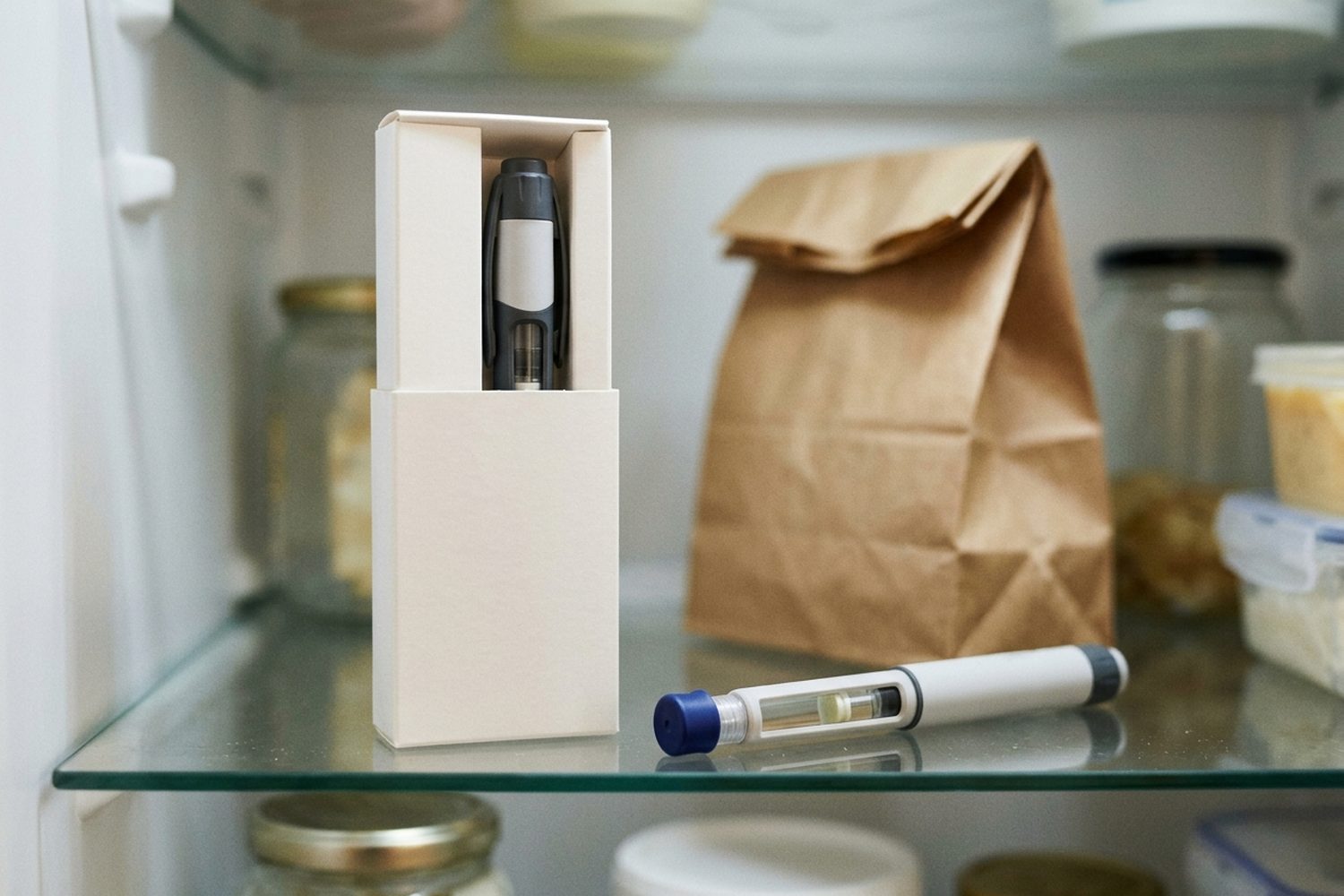
If you have a Wegovy pen in the fridge and you turn the box over to read the small print, you will find a second, plainer word: semaglutide. That is the Wegovy generic name, and it is also the generic name of Ozempic and of Rybelsus, because all three are the same molecule, made by the same company, Novo Nordisk, and sold under three different brand names. In India, for instance, semaglutide was available before March 20, 2026 only as Ozempic, Wegovy and Rybelsus, all of them Novo’s. Ozempic is the type 2 diabetes injection, Wegovy is the weight-loss injection (semaglutide at the 2.4 mg weekly dose for obesity), and Rybelsus is the tablet.
What the generic name does not tell you is whether a generic drug exists. Those are different things. As of September 2026, generic semaglutide was on sale in India, Canada, Brazil, South Africa and Saudi Arabia, while the US, the EU, the UK and Japan stay protected until roughly 2031 to 2032. In the US, brand-name Ozempic or Wegovy costs $935 to $1,349 a month without insurance. Knowing the name of the molecule is free. The molecule is not.
What a “generic name” means, stated with excessive care
Here is the vocabulary, set out with the solemnity of the definitions section of a credit agreement, because in some sense that is what it is. “Generic name” means the name of the active substance, which belongs to nobody. “Brand name” means the name a company chose to sell that substance under, which belongs very much to somebody. “Generic drug” means a separate product, approved as a copy of a particular brand, usually once that brand’s protections have run out. A generic name is a word. A generic drug is a product. (The definitions section is always where the real fights happen.)
The European Medicines Agency says a generic medicine “contains the same active substance(s) as the reference medicine, is used at the same dose(s) to treat the same disease(s), but may differ in inactive ingredients, name, appearance, and packaging.” Notice what the copy is measured against. Not the molecule. The reference medicine, which is to say a brand. So when Health Canada approved Apotex’s weight-loss semaglutide on June 29, 2026, Canada.ca described it as “a generic version of the brand name drug Wegovy.” The generic is a copy of Wegovy, not a copy of the word semaglutide.
Why the same molecule has three brands
There are, roughly, three ways to read this, and they get less comfortable as they go.
The first reading is medical and regulatory, and it is basically tidy. A brand is a bundle: one molecule, one dose, one disease, one delivery format. Change the dose and the disease and you have, for regulatory purposes, a different product, the way Clark Kent and Superman are one guy with two job descriptions and a pair of glasses between them. Because a generic has to match dose and disease, there is a generic Ozempic and a separate generic Wegovy. In Canada, Dr. Reddy’s got the first generic semaglutide approval, for type 2 diabetes, on April 28, 2026; Apotex’s May 1 approval was a generic Ozempic; and Apotex’s weight-loss product, Sevmia, was the third generic semaglutide Health Canada approved. Three approvals, one molecule, sorted by which brand each one copies.
The second reading is about price, and it is also tidy if you happen to be Novo Nordisk. Separate brands let you charge separate prices for the same substance. Before generics arrived in India, Ozempic cost about ₹8,800 to ₹11,175 a month (roughly $100 to $130) and Wegovy cost up to ₹16,400 (roughly $190). The doses differ, so that’s fine as far as it goes. But when more than 40 generic brands launched on March 21, 2026, the day after patent expiry, Novo cut Ozempic by 36% and Wegovy by 48% within 10 days. What is in a name? In this case, about 48%. Generic prices landed around ₹1,800 to ₹4,200 a month (roughly $20 to $50).
The third reading can wait. First, the generics.
Generic semaglutide has brand names too
You might expect a generic to be sold as “semaglutide,” in a plain white box, in a font chosen by a committee. It is not. As of October 8, 2026, 12 generic manufacturers had publicly launched semaglutide in India, selling 20 brands between them. Zydus planned to sell its Semaglutide Injection (15 mg/3 ml) under three names at once: Semaglyn, Mashema and Alterme. One product, three brands. Lol. In Canada the generic Wegovy is Sevmia. In China, Jiuyuan’s application for Jikeqin, a generic version of Wegovy, was accepted for review on February 25, 2026, though as of October 2026 zero generic semaglutides had been approved in mainland China, despite the compound patent expiring there on March 20, 2026.
Somewhere there was a meeting. “Okay, it’s semaglutide, it’s cheaper, and it needs to sound like a moon nobody has visited,” someone said, and everyone wrote that down.
This next part is invented. A generic maker gives each pen strength its own brand, then each pen color, then each pharmacy chain, then each day of the week, so that Tuesday’s injection is Semavora and Wednesday’s is Glyvessa, until the national brand registry has more entries than the country has patients and a doctor (and, presumably, the pharmacist) needs a lookup table to learn that eleven of the names are the same pen. The real number in India is 20 brands from 12 makers. That is a long way from the invented version. It is also a long way from one.
Then there is Poviztra. In November 2025, before the patent expired, Emcure agreed to hook up with Novo Nordisk (commercially, with lawyers present) and co-market Wegovy under that second name. One reading is that Novo wanted more sales reps and more shelf presence before the crowd arrived, which is an ordinary thing for a brand to want. The other is that a second name for the original gives the original a second face to compete with, one that can be positioned without anyone touching the first face’s price. The facts here don’t say what Poviztra costs, so that second reading just sits there.
What the generic name means in the United States
In the US, semaglutide is a generic name with no generic drug on sale yet. The machinery is moving: Apotex received the first FDA tentative approval for a generic version of Ozempic, announced April 10, 2026. “Tentative” is the operative word. It means approved, pending the patents getting out of the way, sort of thing.
One exact number deserves a moment. The FDA treats peptide chains of under 40 amino acid residues as generic drugs, which is why semaglutide, at 31 amino acids, qualifies. So does tirzepatide, at 39. Thirty-nine. One residue under the line. Whether copies of a major weight-loss molecule travel the ordinary generic road is settled by a counting rule, and it clears by a single link in the chain. I mean, it is a long chain. You would think someone would round. Clearing the line does not make copying easy, either: demonstrating bioequivalence for injectable peptides carries a higher analytical burden than for small-molecule generics.
The least comfortable reading
The third reading is that the name is the asset and the molecule is the part that wears out. A patent ends on a date. A brand doesn’t come with one. When generic entry happened in India, it did what it is supposed to do to price: generics took 50% of semaglutide sales by value by April 2026, and Novo cut hard. In Canada, the government notes that many generic medications are 45 to 90% cheaper than brand-name versions.
On the other hand, generic entry did not produce a world of plain boxes labeled semaglutide. It produced Sevmia, Semaglyn, Mashema, Alterme, Poviztra and Jikeqin, and a market where “generic” mostly means “the cheaper brand.” The word semaglutide is the one name on the whole list that nobody is selling under.
For an American payer, that is the uncomfortable part. Until roughly 2031 to 2032, the generic name is information, not an option, and the price is set by the brand. After that the price should fall, if India and Canada are any guide (how far is not settled). The thing on the formulary will still have a brand name, possibly several.
The patent on semaglutide has an expiry date in every country; nothing in any of these filings gives one for the word Wegovy.
Sources
- Canada approves first generic semaglutide for weight loss - Canada.ca
- Canada approves first generic semaglutide for weight loss
- Canada approves first generic semaglutide for weight loss
- Canada approves second generic semaglutide, the first G7 country to do so - BioSpace
- Semaglutide Brand Names in India by Company (2026) | ALTRcare
- Semaglutide Patent Status by Country 2026 | Generic Guide
- The GLP-1 Patent Landscape in 2026: Who Holds What, and When It Opens Up | Patenta.ai
- Jiuyuan Genetic Biopharmaceutical’s Marketing Application for Generic Wegovy® Accepted for Review in China | Pearce IP
- Generic and hybrid medicines | European Medicines Agency (EMA)
- Semaglutide Generics, Six Months In: Every Launch in India, Every Price, and Where China Stands
- Your Questions Answered: Off-patent Semaglutide in 2026 | IQVIA
- The semaglutide story: highlighting the need to maintain patent protection in Canada
- A Key Ozempic Patent Lapses in Canada – Deliberate or a Mistake? - Intellectual Property Law - Reddie & Grose
- Canada becomes the first G7 country to approve a generic version of semaglutide - Canada.ca
- Semaglutide Compounding Pharmacy: What's Legal In 2026
- Apotex Gets Health Canada Approval for Generic Semaglutide
- Canada approves generic semaglutide from Dr. Reddy's, a G7 first enabled by Novo Nordisk's lapsed CAD$250 patent
- Apotex Receives First U.S. FDA Tentative Approval for a Generic Version of Ozempic® (Semaglutide Injection) in Partnership with Orbicular
- Apotex’s Generic Ozempic® (Semaglutide) Secures First FDA Tentative Approval | Pearce IP
- Jiuyuan files China approval bid for Wegovy generic | Pharmaceutical | The Pharmaletter
GLP Generic explains patents, approvals and published research. It is not medical advice, and it never recommends a dose, a product or a seller. Talk to a clinician before you start, stop or change any medicine.